How Ravi Gilani Built India's Most Influential Management Consulting Practice
 Rahul Mishra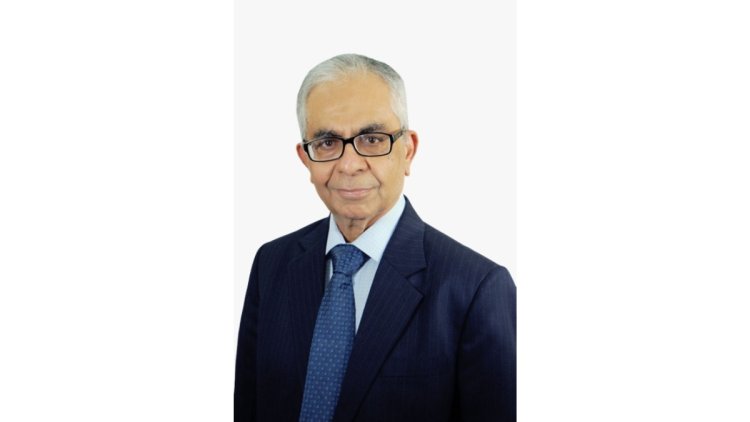
Ravi Gilani, Founder & Managing Consultant, Goldratt Bharat
New Delhi [India], June 4: 27 years ago, he introduced a methodology that very few people had heard about in India. Over the years, he has trained 2,00,000 professionals, created 1,10,000 jobs, and helped one of India's largest steel companies script one of the most memorable turnarounds of India Inc. He did all of it without any advertising, just word of mouth from one business owner to another.
There is a moment in every significant business story where the most important decision happens quietly, without fanfare, in a way that only makes sense in retrospect.
For Ravi Gilani, that moment came in 1998. He had spent 21 years inside two of India's leading industrial organisations - Tata Motors and Eicher - accumulating the kind of operations knowledge that cannot be taught in a classroom. He had watched, at close range, how Indian companies managed their factories, their supply chains, their people, and their cash. He had seen the patterns - the effort, the discipline, the genuine commitment to improvement - and he had also seen what the effort was consistently failing to produce.
Then he encountered a book. A business novel, to be precise, written by an Israeli physicist named Eliyahu Goldratt. It was called The Goal. And what it described - the Theory of Constraints, a methodology built on the idea that every system has one binding constraint that limits its overall output - gave Gilani a framework for the pattern he had been watching for two decades.
In 1998, Ravi Gilani introduced the Theory of Constraints to Indian organisations. He became the first practising Jonah - the term TOC uses for a certified expert - in India. Dr. Goldratt personally trained him in supply chain management. That direct lineage from the methodology's creator to its Indian pioneer is a distinction no other consultant in this country holds.
What followed was not a rapid ascent. It was something harder and more consequential: 27 years of quiet, methodical, documented work inside the operations of Indian industry.
The Practice He Built
India's industrial space has undergone a significant transformation over the past three decades. From capacity-driven growth to efficiency-led expansion, businesses have experimented with multiple frameworks to improve performance. Yet, for many organisations, the gap between effort and outcome continues to persist. Delivery delays, excess inventory, and stretched cash cycles remain common challenges despite years of investment in systems and processes.
Ravi Gilani built Goldratt Bharat to address exactly that gap. Goldratt Bharat is a management consulting firm that collaborates with clients to increase their cash, profit, and sales - by an order of magnitude that is conventionally considered unachievable - through the application of Dr. Eli Goldratt's Theory of Constraints.
The language is deliberate. "Conventionally considered unachievable" is not marketing copy. It is a description of what happens when a company stops improving everything and starts fixing the one thing that actually matters.
During his consulting career, Ravi has worked with a diverse set of leading organisations across industries. His experience spans sectors such as steel, aerospace, packaging, automotive, infrastructure, pharmaceuticals, financial services, and consumer goods. It is the portfolio of someone who has spent nearly three decades inside the operational reality of Indian industry in almost every form it takes.
Clients have been able to improve their OTIF performance from less than 10% to over 95%, with a reduction in lead time by a factor of 2 to 6. These are not projections built into a consultant's pitch deck. They are outcomes documented across real engagements with named companies - outcomes that Ravi Gilani has presented at international forums for two decades.
The Method at the Centre of Everything
What distinguishes Goldratt Bharat from the management consulting mainstream is not the sophistication of the methodology. It is the discipline of the implementation.
Through Goldratt Bharat, Ravi Gilani built a consulting practice that emphasised outcomes over theory. His approach was not to introduce frameworks and exit, but to work closely with organisations in implementing change on the ground. Central to this approach is a structured weekly review mechanism that keeps organisations aligned on a few critical metrics. Goldratt Bharat's weekly review process is a disciplined cadence to drive ongoing improvement, with a focus on execution and identifying preventive and corrective actions. Every week, the goal is to be better than the past 13 weeks' moving average.
That last sentence is worth pausing on. Most Indian companies review performance monthly against annual targets. By the time a problem appears in the monthly data, it has been compounding for four to six weeks. Ravi Gilani's weekly review benchmarks current performance not against a static annual plan - which loses meaning as conditions change - but against a rolling thirteen-week average. The constraint surfaces in real time. The course correction happens before the problem becomes a crisis.
He is known for creating original concepts like Cash Velocity and Cash Score, benefiting many Indian companies through his weekly review process. He focuses on making organisations debt-free through innovative concepts. Cash Velocity and Cash Score are not borrowed frameworks from a business school textbook. They are concepts Ravi Gilani developed from direct engagement with the specific cash flow problems that Indian companies face - problems that the standard financial toolkit does not adequately diagnose.
The first ever presentation on Cash Constraint by Ravi Gilani at the TOCICO conference in Miami, USA in 2006 introduced a situation where a business has enough orders, manufacturing capacity, and reliable suppliers, but faces raw material shortages because suppliers do not supply unless paid upfront. The good news is that with the right measurements, it is possible to overcome a cash constraint in 13 weeks.
A cash constraint was resolved in 13 weeks. That is the headline that most business journalists would reasonably dismiss as implausible - until they see the documentation.
The Case That Defines the Practice
If there is a single engagement that captures what Goldratt Bharat does and what it has built over 27 years, it is their engagement with one of the largest steel companies in India.
When Ravi Gilani began working with Jindal Steel in 2015, the company was navigating one of the most difficult periods in the Indian steel sector's history. Global overcapacity, falling prices, and a debt load that had grown to ₹46,000 crore. The credit rating was D - default grade. The company had 42,500 employees and a market capitalisation that placed it far from the aspirational position its founders had envisioned.
Jindal Steel reduced its working capital by approximately ₹3,600 crore - or a little over half a billion dollars - within two years of TOC implementation. That was the beginning. Over eight years, what followed was one of the most documented private-sector turnarounds in Indian corporate history: net debt fell from ₹46,000 crore to ₹7,000 crore, sales grew nearly fourfold from approximately ₹13,390 crore in 2015-16 to ₹51,680 crore in 2022-23, operating profits surged from ₹2,441 crore to approximately ₹9,538 crore, the credit rating moved from D to AA, and employment grew from 42,500 to 55,600 people.
No restructuring. No capital infusion. No asset sales. A constraint was identified, a weekly review discipline sustained, and eight years of compounding improvement.
In the words of Mr. Naveen Jindal, Chairman, Jindal Steel, "Within our group, Mr. Gilani is revered as a living legend". The transformation was visible not just in the balance sheet but in how the organisation thought about itself and its performance.
The Recognition That Came Quietly
Ravi Gilani's contribution to the Theory of Constraints community has been recognised globally. He is the only Indian recipient of the TOCICO Lifetime Achievement Award - a recognition that reflects his role in advancing the application of TOC in real-world business environments.
Ravi has also served on the board of Theory of Constraints International Certification Organization (TOCICO) - shaping how TOC is developed, certified, and applied internationally, with India's experience at the centre of that conversation.
Over the years, he has trained more than 2,00,000 professionals and contributed to the creation of over 1,10,000 jobs through business transformations. These numbers reflect not just consulting success, but a broader influence on how organisations operate and grow.
He is a globally renowned expert in evaporating cash constraints, with over 51 years of industry experience - 21 years in operations and over 27 years in consulting - working with various Indian and transnational organisations across diverse industries, including engineering, automotive, aerospace, and more.
He has presented case studies at several international forums and industry bodies such as YPO, CII, EO, Halogen Singapore, PHDCCI, IEEMA, TOCICO, and TOC Practitioners Alliance. His work is known intensely within the organisations he has transformed.
The Philosophy Behind the Practice
At the core of Ravi Gilani's work is a set of simple yet powerful ideas. The first is the importance of focus. In complex systems, not everything matters equally. Identifying what matters most and aligning efforts accordingly can unlock disproportionate results.
He enjoys striving for the impossible by challenging sacred assumptions and simplifying complexity. That description - challenging sacred assumptions - is not a branding line. It is a description of what happens in every Goldratt Bharat engagement. The sacred assumption that a struggling company needs to cut headcount. The sacred assumption that more technology will fix a decision-making problem. The sacred assumption that the constraint is external - in the market, in the competition, in the government policy - when it is almost always internal.
A passionate nationalist, he dreams of making Bharat the best place for the next generation to live and work.
It is an unusual thing for a management consultant to say. It is the kind of statement that, in the mouth of someone with a smaller track record, would sound like positioning. In the context of 27 years, 160 companies, 2,00,000 professionals trained, 1,10,000 jobs created, and a ₹39,000 crore debt reduction at India's most documented industrial turnaround, it sounds like something else entirely.
It sounds like what it is: the operating philosophy of someone who has spent nearly three decades treating Indian industry not as a market to serve but as a national project to build.
More than two decades after introducing the Theory of Constraints to India, Ravi Gilani's work remains more relevant than ever. The tools may evolve, but the fundamental question remains the same: what is the one thing that is limiting performance?
Goldratt Bharat is India's leading Theory of Constraints consulting firm, founded by Ravi Gilani in 1998.
Media enquiries: Wing Communications - shiva@wingcomm.in | wingcomm.in
Disclaimer: The content of this post has been automatically published from an agency feed without any changes to the original text and has not been reviewed by our company's editor. Our editorial team or company does not take responsibility for any errors or inaccuracies.